Hillside and Post-and-Pier Retrofit Cost: The Engineered Tier
Hillside and post-and-pier houses sit above the standard brace-and-bolt price class. CRMP's guidance puts hillside single-family retrofits at roughly $7,000 to $20,000, routinely past $10,000, and post-and-pier homes at a typical $10,000 to $15,000. Add an engineering fee of $2,000 to $10,000, because these homes need stamped plans, not the prescriptive standard. Medium-high confidence figures, labeled accordingly.
Why these homes are a different price class
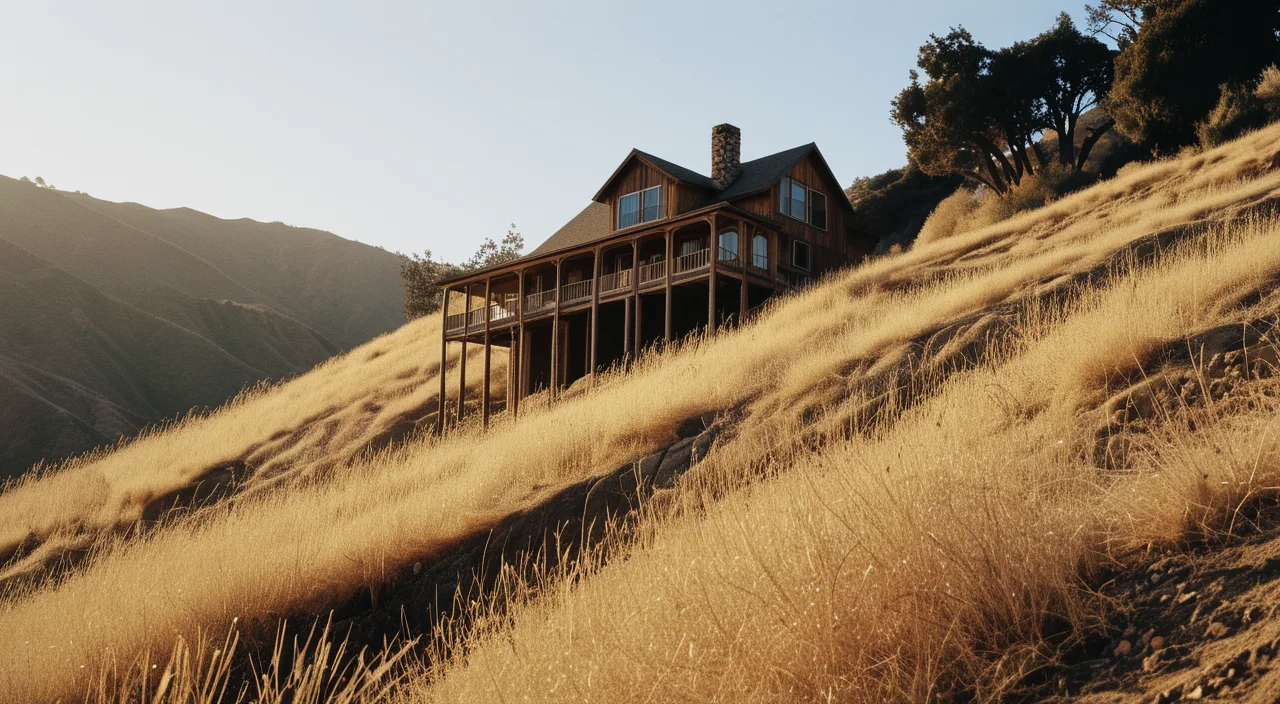
A standard brace-and-bolt works because the typical pre-1980 house is a simple system: continuous perimeter foundation, short cripple walls, gentle grade. The prescriptive standard covers exactly that. A hillside house on tall stilts, or a house resting on scattered posts and piers, is a different structure with different failure modes, racking of tall supports, sliding off isolated footings, so the fix has to be designed for the specific building. That design requirement is what moves the price: $7,000 to $20,000 for hillside homes (routinely past $10,000) and $10,000 to $15,000 for post-and-pier, both CRMP-anchored with contractor corroboration, at medium-high confidence.
The engineering fee is not optional
Budget $2,000 to $10,000 for the engineer, scaling with slope and complexity (multi-contractor consensus, medium confidence). The output is a stamped plan set your contractor builds from and your city plan-checks against. Treat any bid on a hillside or post-and-pier home that skips engineering as a red flag rather than a bargain: an unengineered fix on a non-standard structure is guesswork bolted to your house.
What the money buys, and the grant reality
Typical scope items: shear panels and hold-downs on tall cripple or stilt framing, new connections between posts, beams and footings, sometimes new concrete footings or grade beams on the downhill side. On the funding side, set expectations honestly: EBB is ZIP-restricted with periodic registration windows, it is not a statewide entitlement, and its $3,000 to $10,000 stack covers a smaller fraction of an engineered project than of a $5,000 standard job. Check your ZIP against the program page, run your numbers in the net-cost calculator, and remember the CEA discount still applies once the retrofit is verified, on hillside homes too.
FAQ
How much does a hillside seismic retrofit cost?
Roughly $7,000 to $20,000 for a single-family hillside home per CRMP guidance, routinely exceeding $10,000, plus an engineering and design fee of $2,000 to $10,000. Steep slopes, tall stilt framing and difficult access push toward the top of the range.
How much does a post-and-pier retrofit cost?
Typically $10,000 to $15,000 per CRMP. Post-and-pier homes rest on isolated posts rather than a continuous perimeter foundation, so the retrofit often adds shear panels, connections and sometimes new footings, more scope than a standard brace-and-bolt.
Why do these retrofits need an engineer?
The prescriptive retrofit standard is written for typical raised-foundation homes on gentle grades. Hillside and post-and-pier conditions fall outside it, so a licensed engineer must design the fix: site-specific plans, calculations and a stamp, which is the $2,000 to $10,000 design fee on top of construction.
Does the EBB grant cover hillside or post-and-pier homes?
Sometimes, partially. EBB targets standard raised-foundation retrofits in active ZIP codes, and eligibility is ZIP-restricted with periodic registration windows, not statewide or always open. Even where a grant applies, the $3,000–$10,000 stack covers a smaller share of an engineered project; see the grant page for how the program actually works.
Is an engineered retrofit worth it on a hillside home?
The honest answer is that the stakes are higher on both sides: hillside homes carry more structural risk in shaking, and the retrofit costs more. The framework is the same as everywhere on this site, cost versus grant versus insurance discount versus the do-nothing scenario, walked through on is it worth it.
Continue your survey
- Brace + Bolt Cost What a standard pre-1980 raised-foundation retrofit actually costs, with and without the grant.
- Soft-Story Retrofit Cost Living space over the garage. Single-family-home range, not commercial multi-unit ordinance numbers.
- Earthquake Brace + Bolt Grant Up to $3,000 base, plus up to $7,000 supplemental if your income is at or under $94,480.