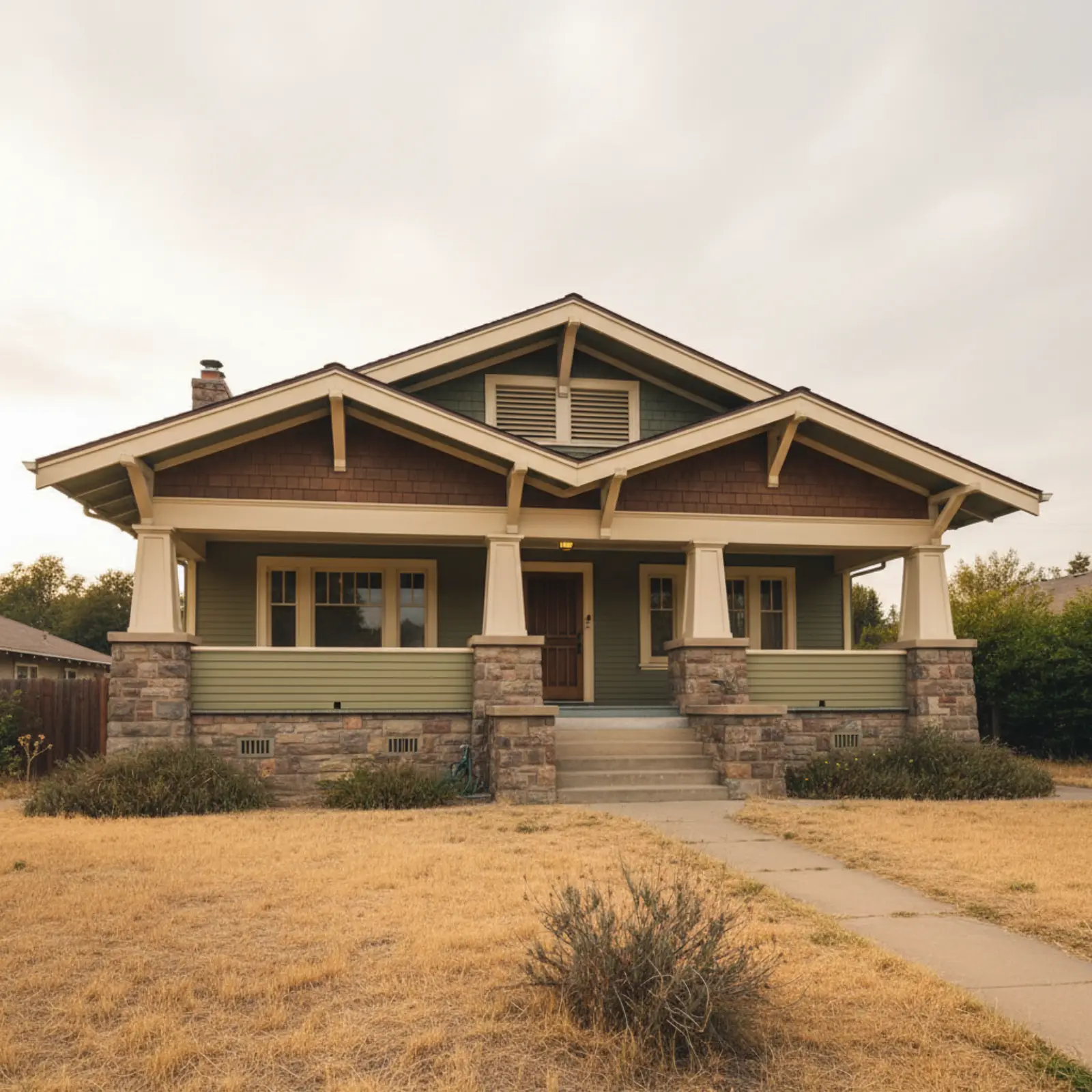
What does each type of seismic retrofit cost?
The type of retrofit sets the price more than anything else, CRMP says. A house that only needs bolting runs about $3,000. Add plywood bracing on short cripple walls and the standard brace-and-bolt range is $3,000 to $7,000. Engineered jobs on post-and-pier, hillside and soft-story houses sit in a higher tier that starts near $10,000.CRMP
| Retrofit type | When it applies | Typical cost | Source |
|---|---|---|---|
| Bolt only | Wood frame sits directly on the foundation, no cripple walls | About $3,000 | CRMP FAQ |
| Brace and bolt | Raised foundation, cripple walls 4 ft or shorter | $3,000–$7,000 | CRMP |
| Tall or stepped cripple walls | Walls over 4 ft (up to 7 ft) or stepped | Engineered design required; no published range | CRMP |
| Post-and-pier | House on isolated posts; new continuous footing | About $10,000–$15,000 | CRMP |
| Hillside | Sloped lot, engineered plans | Can exceed $10,000; national guide: $7,000–$20,000 | CRMP, Fixr |
| Soft-story | Living space over a garage | $15,000–$25,000 on average | CRMP |
| Foundation repair or replacement | Cracked, deteriorated or missing perimeter foundation | No published range; priced after inspection | CRMP |
| Chimney removal | Unreinforced masonry chimney | A few thousand dollars | CRMP |
| Mobilehome bracing system | Manufactured home | Typically under $5,000 | CRMP |
The program data agrees with the brace-and-bolt range. CRMP's August 2026 board memo counts more than 40,051 completed residential retrofits and puts the statewide average for completed EBB jobs at about $6,156.CRMP memo Its cost page adds that 76% of program retrofits come in under $7,000.
One scope note. Soft-story numbers here are for single-family houses. Apartment buildings under the Los Angeles and San Francisco mandatory ordinances are a different, far larger project, and they are not what a homeowner with a room over the garage is budgeting. Apartment owners can find the city rules, contractor estimates and tenant pass-through in our guide to soft-story retrofit cost in Los Angeles.
What makes a retrofit cost more or less?
Six things move a bid: the retrofit type, the length and height of the cripple walls, crawl-space access, rot or foundation damage, whether an engineer has to design the fix, and local permit and labor costs. Square footage matters less than most people expect, because bolts and plywood follow the foundation perimeter, not the floor area.
- Retrofit type. CRMP says it likely plays the biggest role.CRMP
- Cripple wall size. Height and length set the plywood and bolt count. Walls over 4 feet, or stepped walls, need an engineered design instead of a standard plan set.CRMP
- Crawl-space access. A low crawl space, debris or a small hatch slows the crew. Custom Home's 2026 Bay Area guide flags clearances under 18 inches as a cost adder.Custom Home
- Rot and foundation condition. Damaged sill plates and foundation repair add cost, and CRMP's rules require structural damage to be fixed before a house can take part in EBB.CRMP rules
- Engineering. Hillside and post-and-pier houses need an engineered retrofit; a hillside retrofit cannot come from a standard plan set.CRMP
- Permit and location. Every city requires a permit and sets its own fee, and CRMP lists location, materials and labor among the drivers. Ask for the permit fee as its own line in the bid.CRMP
Cost guides do quote per-square-foot figures: $3 to $7 per square foot in both Fixr's January 2025 guide and Custom Home's 2026 Bay Area guide.Fixr Treat that as a sanity check. Two 1,500-square-foot houses can land thousands of dollars apart if one has a long, tall cripple wall and the other sits on a stem wall.
Owner-builders are the low end. CRMP says a do-it-yourself retrofit can cost under $3,000, and EBB allows it, although the owner's own labor is not reimbursed.CRMP
Which grants and discounts apply in 2026?
Three programs can cut the bill: the Earthquake Brace + Bolt (EBB) grant, the Earthquake Soft Story (ESS) grant, and the California Earthquake Authority (CEA) premium discount. As of October 2026, EBB and ESS registration is closed and CRMP has not announced the next window. The CEA discount is available any time your retrofit qualifies.
Earthquake Brace + Bolt (EBB)
EBB pays up to $3,000 toward a code-compliant retrofit of a pre-1980, wood-frame house on a raised foundation in one of CRMP's 1,118 eligible ZIP codes.CRMP rules Owner-occupants with household income at or under $94,480, CRMP's 2026 limit, can add a Supplemental Grant. Its cap depends on region and retrofit type:
| Supplemental Grant cap (after the $3,000) | Northern California | Southern California |
|---|---|---|
| Brace and bolt | $7,000 | $2,650 |
| Bolt only | $2,800 | $1,125 |
EBB is a reimbursement program: it pays documented retrofit costs up to these caps after the work passes final inspection. Supplemental money goes out first come, first served while funds last.CRMP SG rules
Registration is the catch. EBB held two windows in 2025, January 15 to March 26 and August 20 to October 17 after an extension, and none has opened in 2026. At the June 30, 2026 board meeting, staff explained they had chosen not to run a limited registration because the remaining money was not enough for a full one, and further FEMA funding requests are still under review.CRMP minutes Eligibility rules, the ZIP check and the step-by-step process are on our EBB grant page.
Earthquake Soft Story (ESS)
ESS reimburses up to 75% of a soft-story retrofit, capped at $13,000, or $10,000 for two of its four house types. It covers owner-occupied single-family houses built before 2000, no more than two stories, with living space over a garage, in 209 ZIP codes. Registration is closed; the last window opened October 15, 2024, and the work must be done by a contractor from CRMP's ESS directory.CRMP ESS rules
CEA earthquake insurance discount
CEA policyholders get up to 25% off the earthquake premium once the house is retrofitted: 20% for a raised foundation built 1940 to 1979, 25% if built 1939 or earlier, 10% or 15% for other non-slab foundations, and 21% for mobilehomes with a qualifying bracing system. The house must be a one-to-four-unit, wood-frame dwelling built before 1980, with the water heater secured.CEA
Proof is CEA's Dwelling Retrofit Verification form, signed by a licensed general contractor or a civil or structural engineer, or carrying a Brace + Bolt verification number in place of the signature.CEA form A soft-story retrofit alone does not earn the discount, because the form covers sill bolting, cripple-wall bracing and the water heater. Details are on the CEA discount page.
What does a retrofit cost after the grant?
Take a 1956 Oakland bungalow on a raised foundation with cripple walls under 4 feet and a $5,500 brace-and-bolt bid, inside CRMP's typical range. If the owner is accepted into a future EBB window and qualifies for the supplement, the out-of-pocket retrofit cost is $0. Without any grant, the owner pays the full $5,500.
Assumptions: the ZIP is on CRMP's Northern California EBB list, the owner lives in the house, and the CEA premium is $1,800 a year. That premium is an illustration, not a quote; CEA's premium calculator gives your real number.
| Line | EBB + supplement | EBB only | No grant |
|---|---|---|---|
| Contractor bid | $5,500 | $5,500 | $5,500 |
| EBB base grant | −$3,000 | −$3,000 | $0 |
| Supplemental Grant, paid up to the bill | −$2,500 | $0 | $0 |
| Out of pocket for the retrofit | $0 | $2,500 | $5,500 |
| 10 years of the 20% CEA discount | −$3,600 | −$3,600 | −$3,600 |
| Position after 10 years | $3,600 ahead | $1,100 ahead | $1,900 out of pocket |
The same job in a Southern California EBB ZIP ends up in the same place on a $5,500 bid, because the $2,650 supplemental cap still covers the $2,500 gap. On a $7,000 bid it would not: $3,000 plus $2,650 leaves $1,350 to pay. Your numbers will differ, so run them through the calculator above with your ZIP region, income band and premium.
Whether that trade is worth making is its own question, answered with three scenarios on is a seismic retrofit worth it.
How do you get an accurate quote?
Get at least three written bids on the same scope, as CSLB recommends, from contractors holding a California A or B license. Check each license on CSLB's Check A License tool, make sure the bid includes the building permit, and never pay more than $1,000 or 10% of the price, whichever is less, up front.CSLB
If you plan to use a grant later, the contractor must also be on CRMP's directory, and EBB asks for a second bid whenever the first is over $10,000. The full checklist, the red flags and the permit path are in our guide to hiring a seismic retrofit contractor.
Frequently asked questions
How much does a seismic retrofit cost in California?
A standard brace-and-bolt on a pre-1980 raised-foundation house costs $3,000 to $7,000, and CRMP's August 2026 data puts the statewide average for completed EBB retrofits at about $6,156. Bolt-only jobs run about $3,000, post-and-pier about $10,000 to $15,000, and single-family soft-story retrofits $15,000 to $25,000 on average.
Is seismic retrofit cost based on square footage?
Only loosely. Fixr and Custom Home both quote $3 to $7 per square foot, but bids are built from the foundation perimeter, cripple wall height, crawl-space access and any engineering. A small house with long, tall cripple walls can cost more than a larger house that sits on a stem wall.
Is the Earthquake Brace + Bolt grant open in 2026?
No. As of October 10, 2026, CRMP lists EBB registration as closed, and no 2026 window has opened. The last windows ran January 15 to March 26, 2025 and August 20 to October 17, 2025. CRMP has not announced the next one; you can sign up on its site to be notified.
How much does the EBB grant pay?
Up to $3,000 toward the retrofit. Owner-occupants with household income at or under $94,480 can add a Supplemental Grant capped at $7,000 for a Northern California brace-and-bolt, $2,650 in Southern California, and less for bolt-only jobs. EBB reimburses documented costs up to those caps after the final inspection.
Does a soft-story retrofit qualify for a grant?
Through ESS, when registration is open. ESS reimburses up to 75% of the cost, capped at $13,000 or $10,000 depending on house type, for owner-occupied single-family houses built before 2000 with living space over a garage. ESS registration is closed as of October 2026, and a CRMP directory contractor is required.
How much does the CEA insurance discount save?
Between 10% and 25% of your CEA earthquake premium, depending on foundation type and build year, or 21% for a mobilehome with a qualifying bracing system. CEA publishes percentages, not dollar savings, so multiply your own premium by the tier. At $1,800 a year, the 20% tier is worth $360 a year.
Can I get the CEA discount without the EBB grant?
Yes. Any qualifying retrofit counts. A licensed general contractor or a civil or structural engineer checks the bolting, cripple-wall bracing and water heater, then signs CEA's Dwelling Retrofit Verification form, which you send to your insurer. The house must be wood-frame and built before 1980. See the CEA discount page.
Do I need a permit and an engineer?
You need a building permit for any seismic retrofit. A standard plan set covers bolt-only and brace-and-bolt work on cripple walls of 4 feet or less. Cripple walls over 4 feet, hillside houses and post-and-pier houses need plans from a licensed engineer, and soft-story work often uses FEMA P-1100 plans.
Is a seismic retrofit worth the cost?
For a qualifying raised-foundation house with an EBB grant, the worked example above ends $1,100 to $3,600 ahead after ten years. Without a grant, $360 a year of discount takes about 15 years to repay a $5,500 bid, and the life-safety value is a separate call. Is it worth it runs three scenarios.
Use the table above for a first budget, then replace it with real numbers. The seismic retrofit cost that counts is the one on a written bid for your house, run through the calculator with your grant status and your own CEA premium.
Sources
- CRMP, How Much Does a Seismic Retrofit Cost in California? Cost ranges by type, 76% statistic. Accessed October 2026.
- CRMP, FAQs. Bolt-only cost, permits, engineering requirements.
- CRMP Governing Board memo, August 25, 2026. Completed retrofits and the $6,156 average.
- CRMP Governing Board minutes, June 30, 2026. Registration decision and pending FEMA funding.
- CRMP, EBB Supplemental Grant Rules, effective January 28, 2026. Caps by region and the $94,480 income limit.
- CRMP, EBB Rules for Participation, effective September 14, 2026. Eligibility and process.
- CRMP, ESS Rules for Participation, effective February 1, 2026. Soft-story grant caps.
- CRMP, Raised Foundation House and Hillside House. When an engineer is required.
- CEA, earthquake insurance premium discounts and the Dwelling Retrofit Verification form.
- CSLB, Finding the Right Contractor and Check A License.
- Fixr, Earthquake Retrofit Cost (updated January 31, 2025). Hillside range, per-square-foot figures.
- Custom Home, Seismic Retrofit Cost in the Bay Area (updated April 21, 2026). Per-square-foot figures, crawl-space clearance.